hospitality staffing matters when Australian hospitality businesses need decisions that work commercially and operationally. The right employment mix depends on demand stability, role criticality and the local labour market. Permanent employees provide continuity, casual staff add flexibility and seasonal resources help manage predictable peaks. Problems arise when these categories are used as substitutes for forecasting, training or fair roster design.
This guide takes a operations playbook approach and also considers hospitality workforce planning, casual hospitality staff, permanent hospitality employees, seasonal staffing and hospitality roster planning. The aim is to connect local conditions with practical action rather than offer a generic checklist detached from the venue.
For hospitality staffing, a useful review makes the baseline, intended decision and accountable owner explicit. It also identifies what evidence will be checked after implementation and which guest, workforce or safety measures must not deteriorate in pursuit of a financial result. Managers should record assumptions about demand, labour, supply and timing so that the outcome can be interpreted fairly when conditions change. This discipline keeps the project connected to everyday operations and gives the team a clear reason for each action. It also makes hospitality staffing easier to revisit: future leaders can see what was decided, why it was selected and when the standard should be reviewed rather than starting again from memory.
- Frame the Operational Problem
- Five Parts of the Operating System
- Build the Improvement Playbook
- Adapt the Method to the Australian Venue
- Use a Practical Review Rhythm
- Implementation Checklist
- Failure Modes to Design Out
- Make Improvement Repeatable
- Frequently Asked Questions
Frame the Operational Problem
Hospitality staffing is the system used to forecast labour, define roles, recruit people, build rosters, develop capability and retain coverage. Employment type is one design choice within that system. A reliable model ensures each service period has the required leadership and skills, not merely an acceptable number of names on the roster.
Australian venues need enough flexibility to respond to demand without making service dependent on a small group of exhausted employees or a constant supply of new casuals. The workforce mix should protect core knowledge, provide predictable development and maintain an economical response to weekends, events and seasonal variation.

Five Parts of the Operating System
Core Permanent Capability
Permanent roles should protect leadership, technical knowledge, culture and the routines that keep the venue stable. Define the minimum core for normal trading and ensure critical responsibilities have trained backup. A permanent position adds value when its capacity is used across service, preparation, coaching and improvement.
Casual Flexibility
Casual employees can cover variable demand, but flexibility must work for both parties. Recruit for the availability patterns the venue actually needs, publish rosters predictably and avoid concentrating all difficult shifts among a small dependable group. Skill records help managers roster capability rather than familiarity.
Seasonal Workforce Planning
Start before the peak by forecasting volume, accommodation or transport constraints and the time required for recruitment and competence. Returning seasonal workers are valuable, but the venue also needs documented training and local supervisors so knowledge survives when individuals do not return.
Skills Mix by Shift
A roster can meet its labour-hour target and still fail if leadership, bar, coffee, section or cookery skills are missing. Define the minimum capability by outlet and service period. Cross-training creates resilience when it is planned and assessed rather than assumed from job titles.
Retention and Fairness
Employees notice roster stability, communication, workload and manager behaviour. Track repeated late changes, unavailable breaks and uneven access to hours. Retention improves when expectations are accurate at recruitment, onboarding is useful and concerns produce visible action.
Build the Improvement Playbook
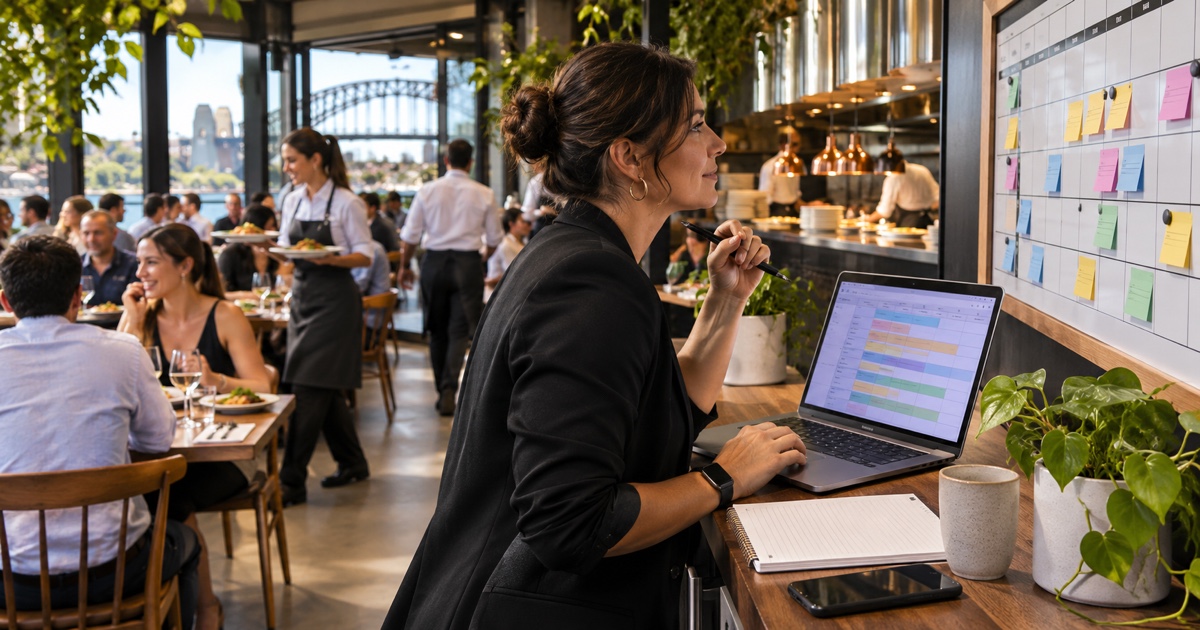
- Forecast demand: Translate bookings, occupancy, events and seasonality into labour hours and skills by daypart.
- Define the core: Identify permanent leadership and technical roles required for stable normal trading.
- Design the flexible pool: Set target casual availability, seasonal numbers and trained backup for critical shifts.
- Recruit and train early: Allow enough time for checks, induction, supervised practice and feedback before peak demand.
- Review monthly: Compare coverage, labour cost, overtime, turnover and service outcomes with the forecast.
Adapt the Method to the Australian Venue
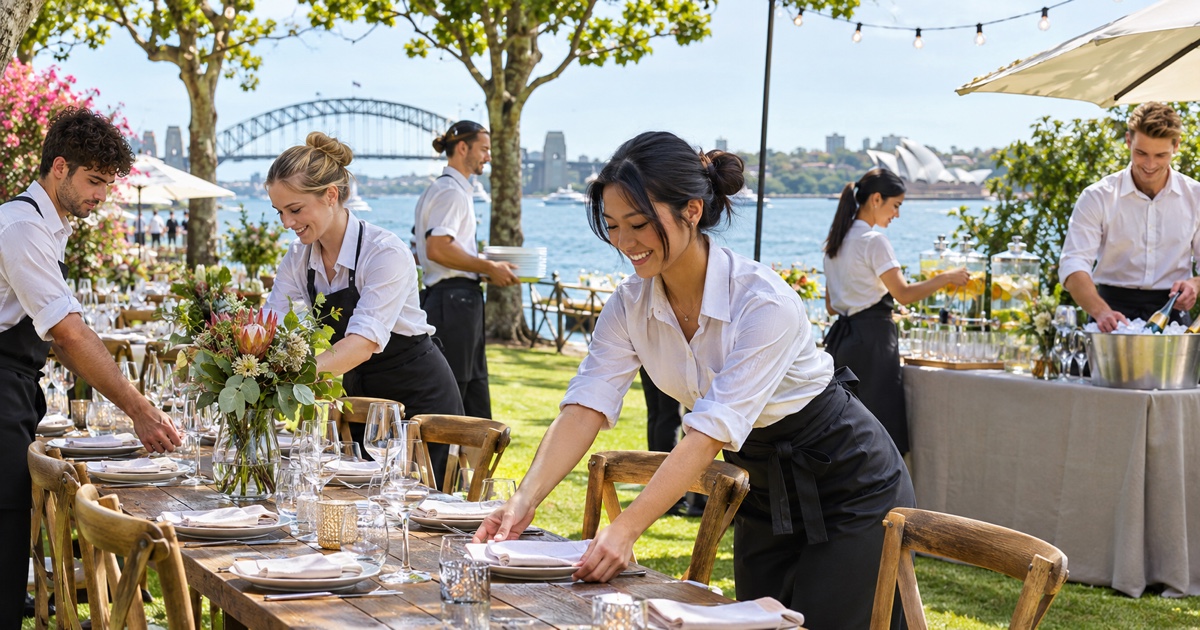
Award classifications, penalty rates, minimum engagements, breaks and rostering obligations affect the cost and practicality of different staffing choices. Regional and tourism locations may face limited labour supply and housing pressure, while metropolitan venues compete across many employers. Demand can also change sharply around school holidays, festivals, weather and event calendars.
Model required hours and skills by daypart before deciding headcount. Identify roles that need continuity, such as venue leadership, kitchen supervision and training ownership. Build casual and seasonal pools early enough for induction and practice. Obtain current workplace advice for contracts, classifications and roster obligations rather than relying on arrangements inherited from a previous season.
Use a Practical Review Rhythm
Monitor coverage, unfilled shifts, overtime, labour cost by department, roster changes after publication, first-90-day turnover, seasonal return rate, time to competence and guest-service indicators. Analyse the measures by role and shift. A balanced model should reduce emergency coverage and maintain quality without unnecessary fixed cost.
Use the same definitions and review period each time so that the trend is meaningful. Combine financial and workforce measures with a service indicator; an apparent saving is not an improvement if it transfers work to managers, slows delivery or weakens the guest experience.
Implementation Checklist
Before committing time or budget, check that the business can answer the following points clearly. A gap does not always stop the project, but it should become an explicit action rather than a hidden assumption.
- Demand is forecast by outlet, daypart and season rather than from one weekly average.
- Every critical shift has defined leadership and technical requirements.
- Employment arrangements and classifications have received current professional review.
- New employees have a role-specific onboarding path and competence checkpoints.
- Managers can explain how availability, performance and fairness influence roster decisions.
Failure Modes to Design Out
- Using casual recruitment to compensate for unclear roles and preventable turnover.
- Increasing permanent headcount without productive work outside peak service hours.
- Waiting until the start of a season to recruit and train the workforce required for it.
- Counting total employees instead of checking the skill and leadership mix of each shift.
- Ignoring roster fairness and manager behaviour when availability and retention decline.
Make Improvement Repeatable
A sustainable staffing model links forecasting, employment mix, recruitment, onboarding and everyday leadership. Aspire Hospitality Group can help Australian venues source hospitality talent, build workforce plans and establish the training and digital SOPs that allow permanent, casual and seasonal teams to perform to one clear standard.
Explore Aspire Hospitality Group’s hospitality workforce solutions and hospitality training and onboarding for connected support. To discuss the priorities, operating context and next steps for your organisation, contact the Aspire Hospitality Group team.
Frequently Asked Questions
What is the best permanent-to-casual ratio for hospitality?
There is no universal ratio. Use demand stability, role criticality, local availability, award obligations and training requirements to model the mix for each department.
When should seasonal hospitality recruitment begin?
Begin early enough to source candidates, resolve accommodation or travel issues and complete useful onboarding before the peak. Complex or regional roles may require several months.
Can casual staff hold leadership responsibilities?
Capability matters more than label, but the venue needs reliable availability, clear authority and appropriate employment arrangements. Critical leadership should have trained backup.
How can venues reduce emergency roster gaps?
Improve availability data, publish rosters predictably, cross-train priority skills, maintain an active relief pool and address turnover causes instead of relying only on last-minute calls.
Which workforce metric should be reviewed first?
Start with whether every service has the required skills and leadership. Then review cost, overtime, early turnover and a service-quality measure to understand the broader result.