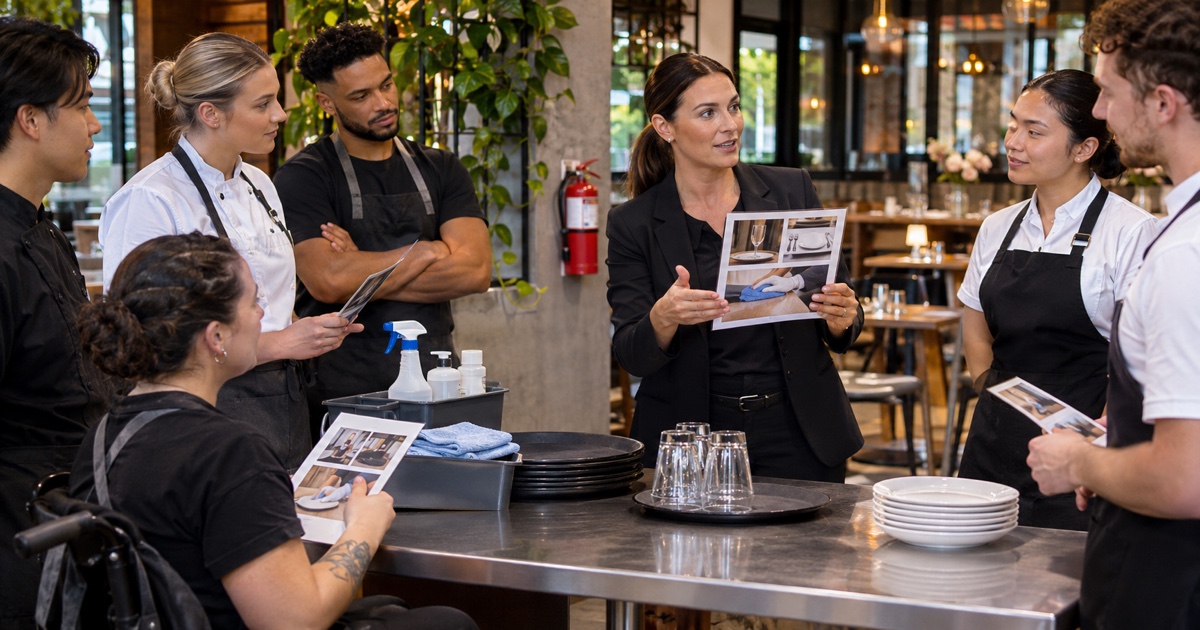
restaurant consultant matters when Australian hospitality businesses need decisions that work commercially and operationally. A restaurant can be busy and still struggle to convert sales into sustainable profit. Menu margin, labour deployment, waste, leadership routines and service flow interact. A consultant helps the operator examine those connections with dedicated time and external perspective, then turn the findings into controlled actions.
This guide takes a data-to-decision approach and also considers restaurant business consultant, restaurant profit improvement, restaurant operations consulting, food cost consulting and restaurant systems. The aim is to connect local conditions with practical action rather than offer a generic checklist detached from the venue.
For restaurant consultant, a useful review makes the baseline, intended decision and accountable owner explicit. It also identifies what evidence will be checked after implementation and which guest, workforce or safety measures must not deteriorate in pursuit of a financial result. Managers should record assumptions about demand, labour, supply and timing so that the outcome can be interpreted fairly when conditions change. This discipline keeps the project connected to everyday operations and gives the team a clear reason for each action. It also makes restaurant consultant easier to revisit: future leaders can see what was decided, why it was selected and when the standard should be reviewed rather than starting again from memory.
- Start with a Clear Commercial Question
- The Australian Operating Context
- Five Areas to Analyse
- A Practical Decision Sequence
- Measures That Reveal Real Progress
- Mistakes That Distort the Result
- Management Readiness Checklist
- Turning Evidence into Action
- Frequently Asked Questions
Start with a Clear Commercial Question
A restaurant consultant advises or supports operators on concept, openings, menu, costs, kitchen and service systems, workforce, guest experience, turnaround or growth. The work may be diagnostic, project-based or implementation focused. Useful scope begins with a commercial question and evidence, not a predetermined collection of templates.
The aim is improved performance that can be maintained by the restaurant’s own managers and team. Recommendations should protect the concept while addressing root causes. The consultant provides analysis and structure; the owner retains business decisions and the responsibility to resource and lead implementation.

The Australian Operating Context
Australian restaurants face award-based labour costs, penalty rates, ingredient volatility, licensing, local competition and different metropolitan or regional demand patterns. Advice should use the restaurant’s actual trading periods and obligations. Changes to employment, tax, safety or licensing require relevant specialist advice beyond general operations consulting.
Build a baseline covering sales by daypart, menu contribution, labour, waste, guest feedback and management time. Observe service before changing the roster or menu. Involve the chef and front-of-house leaders in diagnosis so recommendations reflect constraints and become part of the management system rather than an external report.
Five Areas to Analyse
Revenue and Menu Mix
Examine covers, average spend, category mix, discounts and availability rather than relying on total sales. Determine whether the opportunity comes from demand, conversion, price, product mix or service recommendation. Protect value perception when adjusting price or portion.
Food and Beverage Control
Compare standard recipe cost, purchasing, yield, portion, waste and actual results. Variance may come from supplier change, preparation, recording or sales mix. Focus on the few ingredients and items with the greatest financial exposure before redesigning the whole system.
Labour and Workflow
Map preparation and service tasks against demand by daypart. Labour reduction is not the only goal; better sequencing, cross-training and management coverage can increase capacity and consistency. Check whether the roster contains the right skills at the right moments.
Team and Management Routines
Review role clarity, shift briefings, handovers, feedback and weekly decision meetings. A restaurant often knows what is wrong but lacks a routine that converts information into ownership. Simple management cadence can sustain gains that a one-off intervention cannot.
Guest Experience and Positioning
Observe arrival, ordering, pacing, recovery and departure. Compare the experience with the concept and customer promise. Commercial changes should strengthen, or at least preserve, the reasons guests choose the restaurant.
A Practical Decision Sequence
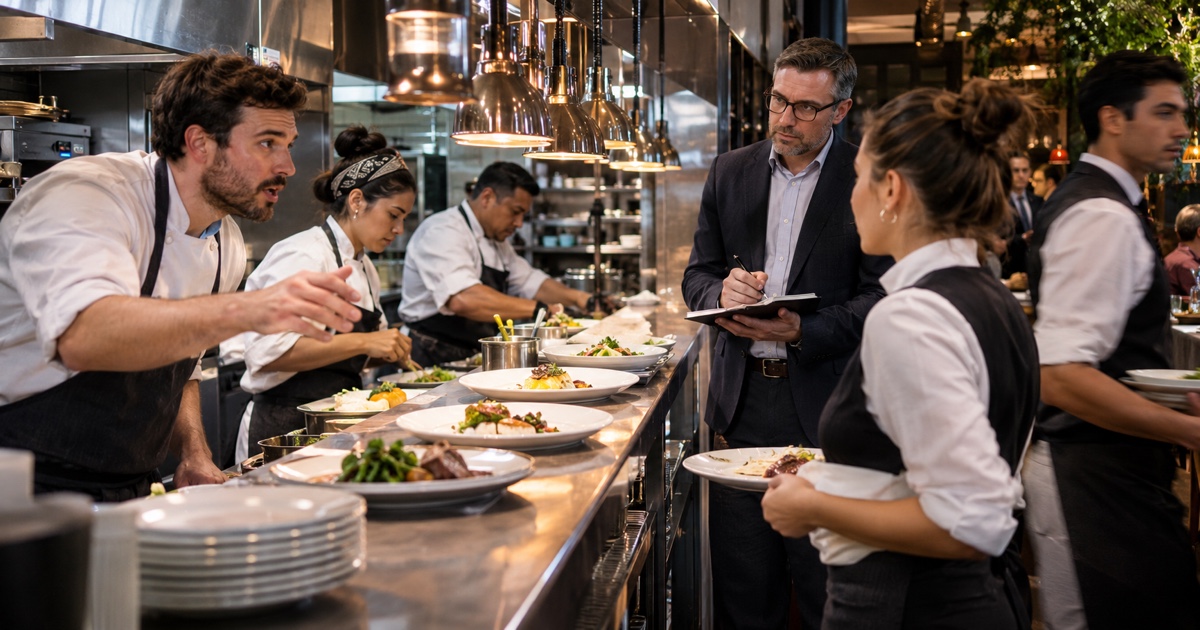
- Define the commercial question: Choose a specific result such as margin, capacity, consistency or management control.
- Establish the baseline: Use comparable sales, cost, labour, waste, guest and workforce data.
- Observe service: Follow product and guest journeys to identify constraints that reports cannot show.
- Pilot priority changes: Test a small group of actions with owners, measures and a defined review period.
- Embed the method: Update recipes, SOPs, training and management reviews after successful tests.
Measures That Reveal Real Progress
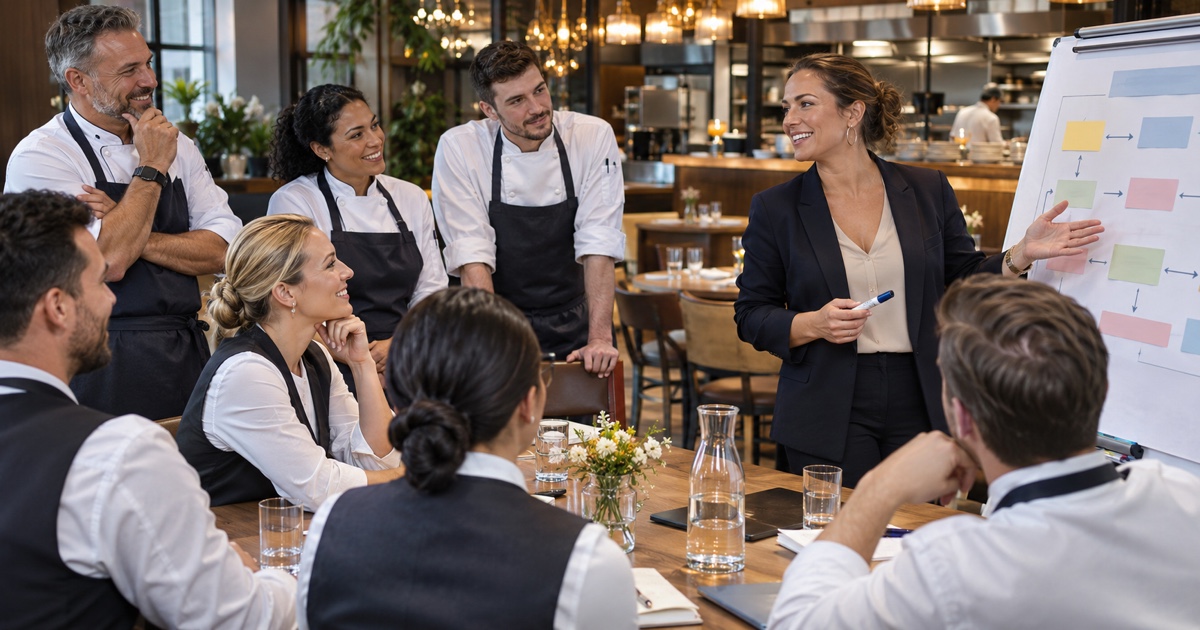
Use contribution dollars, food and beverage cost, labour by daypart, waste, average spend, covers, ticket time, complaints, repeat visits and workforce indicators suited to the brief. Review leading behaviours such as recipe checks or shift briefings alongside final financial outcomes. Improvement is stronger when both adoption and result are visible.
Use the same definitions and review period each time so that the trend is meaningful. Combine financial and workforce measures with a service indicator; an apparent saving is not an improvement if it transfers work to managers, slows delivery or weakens the guest experience.
Mistakes That Distort the Result
- Changing the menu before current recipes and sales buttons are reconciled.
- Cutting labour hours without mapping the work and service capacity they support.
- Treating supplier price as the only cause of food-cost variance.
- Launching several major changes together and losing the ability to learn from results.
- Depending on the consultant for decisions that internal managers must eventually own.
Management Readiness Checklist
Before committing time or budget, check that the business can answer the following points clearly. A gap does not always stop the project, but it should become an explicit action rather than a hidden assumption.
- Owners and managers agree on the priority and information the consultant may access.
- Financial and operating data can be reconciled for a representative trading period.
- The kitchen and service leaders are included in diagnosis and implementation.
- The business can allocate time and authority to test recommendations during trading.
- Success measures include margin, people and guest outcomes rather than one isolated number.
Turning Evidence into Action
Restaurant improvement requires clear priorities and a system that survives busy service. Aspire Hospitality Group can help Australian operators analyse commercial performance, refine menus and workflows, strengthen management routines and connect the plan with practical SOPs and training.
Explore Aspire Hospitality Group’s restaurant and hospitality consulting and restaurant training and digital SOPs for connected support. To discuss the priorities, operating context and next steps for your organisation, contact the Aspire Hospitality Group team.
Frequently Asked Questions
What does a restaurant consultant review first?
The starting point depends on the question, but a useful baseline often includes sales, menu contribution, labour, purchasing, waste, guest feedback and management routines.
Can a consultant improve restaurant profit without increasing prices?
Potential options include menu mix, waste, purchasing, portions, workflow, scheduling and sales conversion. Price may still be relevant, but it is not the only lever.
How should recommendations be prioritised?
Choose actions with material impact, practical control and manageable disruption. Test a small number, measure them and then expand.
Will a restaurant consultant manage the team?
Some engagements include implementation support, but everyday authority remains with the employer and venue leaders unless a separate interim-management scope is agreed.
How long before results can be measured?
Operational behaviours can change quickly, while financial and guest trends need representative trading. Agree on leading indicators and a realistic review period before testing.