
For hospitality operators, menu engineering is rarely an isolated task. It affects how managers use time, how teams work, how costs are controlled and how consistently guests experience the business. The practical question is not simply whether a venue should pay attention to menu engineering, but how to build it into normal operations without creating another layer of complexity. Menu engineering is the disciplined process of comparing what guests buy with what each item contributes after its direct food cost. It turns a menu from a creative list of dishes into a commercial tool that can guide pricing, placement, portioning and product decisions. This guide explains the decisions behind the topic, the warning signs to watch for and the steps that turn a good idea into a repeatable business system.
In this guide
- Why this matters
- Key decisions and operating factors
- Implementation and measurement
- Common mistakes
- Checklist
- Local and Aspire context
- Frequently asked questions

Why This Matters to Hospitality Profitability
The commercial value of menu engineering comes from reducing uncertainty. Hospitality businesses operate with narrow margins, variable demand, changing labour requirements and many small decisions happening across a shift. When menu engineering is managed informally, owners often rely on memory, individual staff or last-minute fixes. That may work while the business is small, but it becomes expensive as volume, team size or the number of locations grows. A more structured approach creates clearer expectations, better information and a basis for measuring what is actually improving.
What Good Practice Looks Like
A useful starting point is to examine five connected areas: accurate recipe costing; sales mix and item popularity; contribution margin; menu layout and naming; portion and purchasing consistency. These should not be reviewed independently. A decision that saves money in one area can create extra labour, reduce quality or slow service somewhere else. The strongest approach looks at the whole operating model and asks whether the change is practical during a normal busy service, not only on paper.
Accurate Recipe Costing
Accurate Recipe Costing is one of the control points that determines whether menu engineering produces a useful result. Managers should define what good performance looks like, who owns the decision and what information is needed to review it. This is also where related considerations such as menu profitability become important. A practical standard should be simple enough for the team to follow, specific enough to audit and flexible enough to handle genuine exceptions without returning to ad hoc decision-making.
Sales Mix And Item Popularity
Sales Mix And Item Popularity is one of the control points that determines whether menu engineering produces a useful result. Managers should define what good performance looks like, who owns the decision and what information is needed to review it. This is also where related considerations such as food cost control become important. A practical standard should be simple enough for the team to follow, specific enough to audit and flexible enough to handle genuine exceptions without returning to ad hoc decision-making.
Contribution Margin
Contribution Margin is one of the control points that determines whether menu engineering produces a useful result. Managers should define what good performance looks like, who owns the decision and what information is needed to review it. This is also where related considerations such as contribution margin become important. A practical standard should be simple enough for the team to follow, specific enough to audit and flexible enough to handle genuine exceptions without returning to ad hoc decision-making.
Menu Layout And Naming
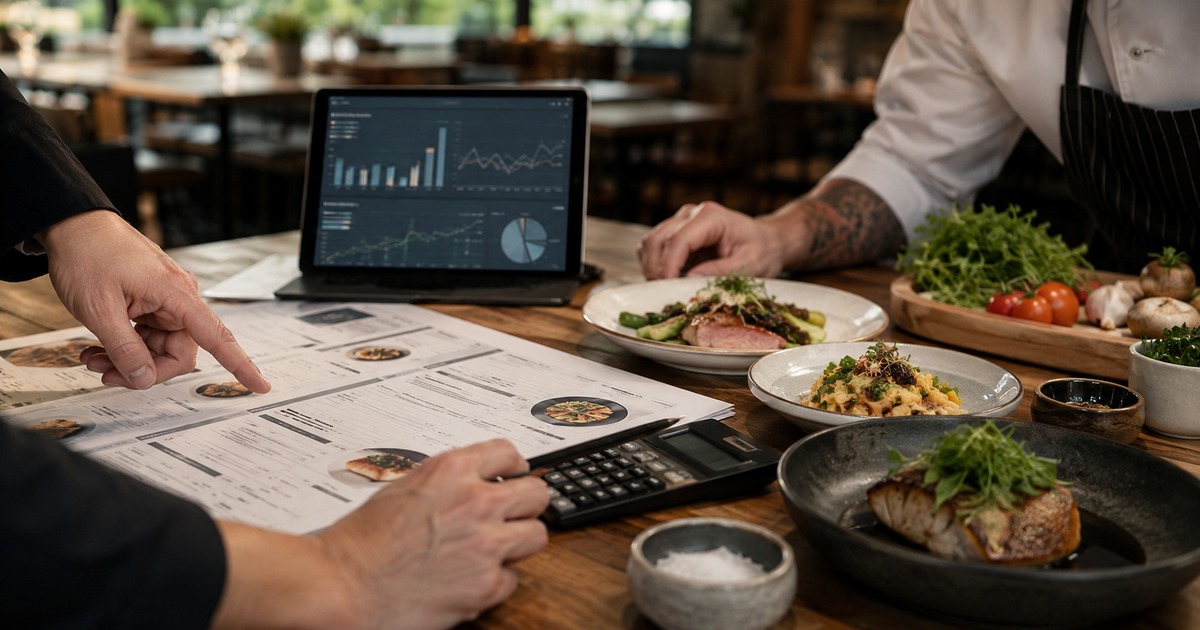
Menu Layout And Naming is one of the control points that determines whether menu engineering produces a useful result. Managers should define what good performance looks like, who owns the decision and what information is needed to review it. This is also where related considerations such as menu pricing become important. A practical standard should be simple enough for the team to follow, specific enough to audit and flexible enough to handle genuine exceptions without returning to ad hoc decision-making.
Portion And Purchasing Consistency
Portion And Purchasing Consistency is one of the control points that determines whether menu engineering produces a useful result. Managers should define what good performance looks like, who owns the decision and what information is needed to review it. This is also where related considerations such as restaurant menu analysis become important. A practical standard should be simple enough for the team to follow, specific enough to audit and flexible enough to handle genuine exceptions without returning to ad hoc decision-making.
A Practical Implementation Process
Implementation works best in stages. First, document the current process instead of designing the ideal process from memory. Second, collect a small set of reliable data points that show cost, time, demand or quality. Third, choose one or two changes with a clear owner and test them under normal operating conditions. Fourth, capture the new method in an SOP, checklist, training module or reporting routine. Finally, review the result after a defined period. This cycle prevents menu engineering from becoming a one-off project that slowly disappears once management attention moves elsewhere.
How to Measure Whether It Is Working
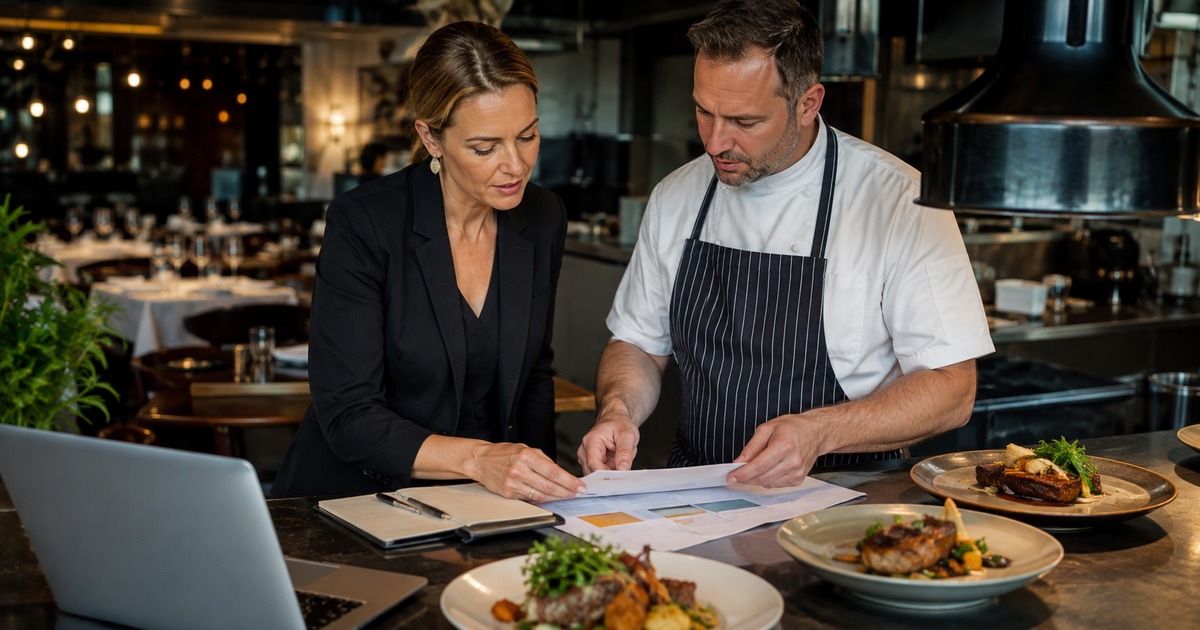
Measurement should stay close to the business outcome. Depending on the topic, useful indicators may include food cost percentage, contribution margin, labour cost, vacancy days, time-to-productivity, staff turnover, guest feedback, event satisfaction, processing time or error rates. The purpose is not to build a large dashboard for its own sake. A small number of measures, reviewed consistently, is more valuable than dozens of reports that nobody acts on. Pair financial measures with an operational or guest measure so that cost reduction does not hide a decline in service quality.
Common Mistakes to Avoid
Common problems include pricing from intuition rather than current cost data; keeping low-margin items because they are familiar; changing too many dishes at once; ignoring kitchen complexity and preparation time. These failures usually come from treating the topic as a quick fix rather than part of the operating system. A business may introduce a new tool, supplier, recruiter or procedure, but if roles remain unclear and the team is not trained, the same problem often reappears in a different form. Before adding another solution, identify the root cause, the person responsible and the measure that will show whether the change worked.
Checklist Before You Make Changes
- Define the business outcome you expect from menu engineering, not just the activity to be completed.
- Record the current process, cost or performance baseline before making changes.
- Assign one accountable owner and identify which team members need input.
- Review the relevant factors: accurate recipe costing, sales mix and item popularity, contribution margin.
- Test changes in real operating conditions before rolling them out widely.
- Document the final method in a practical SOP, checklist or training process.
- Review results on a fixed schedule and update the system when conditions change.

Local Context for Australian Hospitality Businesses
For operators in Albany, the Great Southern and across Western Australia, local supplier pricing, seasonal demand and labour availability can change the economics of a menu quickly. Local SEO content is strongest when it reflects these real operating conditions rather than repeatedly inserting place names. For Aspire Hospitality Group, the useful connection is between local hospitality experience in Albany, Western Australia and broader systems for consulting, workforce, training and catering. That gives a reader context for why the advice is relevant while keeping location claims accurate.
Connecting the Strategy to Aspire Hospitality Group
Aspire Hospitality Group combines strategy, staffing, systems, training and technology for hospitality businesses. For operators reviewing menu engineering, the most relevant next step is to compare the issue with Aspire’s hospitality consulting. The website describes practical support around menu engineering and cost control, workforce and international hiring, digital SOPs, training, virtual assistants and scalable operating systems. The value of linking these services is that operational problems rarely sit in one department: a menu problem can be a training problem, a staffing problem can be an onboarding problem, and an efficiency problem can be a poorly documented process.
Conclusion
Menu Engineering works best when it is treated as a management system rather than a one-off task. Start with a clear baseline, make decisions using real operating information, document what works and train the team so the improvement survives busy periods and staff changes. That is the difference between a temporary fix and a repeatable capability that supports profitability and growth.
Frequently Asked Questions
What is menu engineering?
Menu engineering is the disciplined process of comparing what guests buy with what each item contributes after its direct food cost. It turns a menu from a creative list of dishes into a commercial tool that can guide pricing, placement, portioning and product decisions.
How do I know whether menu engineering needs attention?
Look for repeated workarounds, inconsistent results, rising cost, management time being consumed by the same issue or performance that depends too heavily on one person. Those are signs that the process should be reviewed rather than patched again.
How long does it take to improve menu engineering?
The timeframe depends on the scope and the quality of existing data. A focused issue can often be diagnosed and tested quickly, while a multi-venue or workforce-wide change needs staged implementation, training and follow-up.
What should be measured?
Use measures tied to the actual objective: cost, margin, labour, time, quality, retention, guest feedback or compliance. Avoid measuring activity alone when the business outcome is what matters.
Can Aspire Hospitality Group help with menu engineering?
Aspire provides hospitality consulting, workforce, training, digital SOP and related operational services. The appropriate service depends on whether the issue is primarily commercial, people-based, process-based or event-related.