
menu engineering matters when Australian hospitality businesses need decisions that work commercially and operationally. Sales volume alone does not show whether a menu is helping the venue earn an acceptable return. A popular item may have a weak contribution after ingredients and preparation are considered, while a profitable dish may be overlooked because its description, position or service explanation does not support the choice.
This guide takes a data-to-decision approach and also considers restaurant menu analysis, menu profitability, food cost control, contribution margin and menu mix analysis. The aim is to connect local conditions with practical action rather than offer a generic checklist detached from the venue.
For menu engineering, a useful review makes the baseline, intended decision and accountable owner explicit. It also identifies what evidence will be checked after implementation and which guest, workforce or safety measures must not deteriorate in pursuit of a financial result. Managers should record assumptions about demand, labour, supply and timing so that the outcome can be interpreted fairly when conditions change. This discipline keeps the project connected to everyday operations and gives the team a clear reason for each action. It also makes menu engineering easier to revisit: future leaders can see what was decided, why it was selected and when the standard should be reviewed rather than starting again from memory.
- Start with a Clear Commercial Question
- The Australian Operating Context
- Five Areas to Analyse
- A Practical Decision Sequence
- Measures That Reveal Real Progress
- Mistakes That Distort the Result
- Management Readiness Checklist
- Turning Evidence into Action
- Frequently Asked Questions
Start with a Clear Commercial Question
Menu engineering combines item-level sales data with current recipe costs to show how popularity and contribution margin interact. The analysis is most useful when it also considers preparation time, waste, kitchen capacity, guest expectations and the strategic role of each category. It is therefore a management process, not simply a visual redesign exercise.
For an Australian restaurant, the commercial question is not which dishes look most profitable on a spreadsheet. It is which menu mix can be sold consistently, produced within the available labour and equipment, and understood by guests without weakening the concept. The answer may involve pricing, portion changes, descriptions, placement, training or removing complexity from the kitchen.

The Australian Operating Context
Australian operators face ingredient-price movement, award-based labour costs, seasonal supply, regional freight differences and strong customer sensitivity to value. A review based on old invoices or a single unusually busy month can lead to poor conclusions. GST treatment, supplier rebates, yield loss and the cost of garnishes or packaging also need consistent definitions before items are compared.
Use a representative sales period and cost recipes with current purchase prices and realistic yields. Separate dine-in, takeaway and delivery where the economics differ. Discuss the findings with the chef and service leaders before changing the menu, because an item that appears attractive in the data may create a bottleneck during peak service or be important to a particular guest segment.
Five Areas to Analyse
Build Reliable Item Data
Export units sold, selling price, discounts, recipe cost and category for the same period. Clean duplicated buttons and inconsistent item names before analysis. Record the cost date and recipe version so the numbers can be updated rather than recreated when supplier prices or portions change.
Use Contribution Margin with Popularity
Contribution margin shows the dollars left after the standard ingredient cost, while popularity shows guest demand. Reading both together helps distinguish items to protect, reposition, refine or reconsider. Food-cost percentage remains useful, but it should not be the only measure used to make a menu decision.
Test the Operational Load
Count preparation stages, service touches, specialised equipment and waste exposure. A dish with a strong theoretical margin may still reduce total profit if it slows the pass, requires overtime or causes inconsistent portions. Review performance during the dayparts in which the item actually sells.
Guide Choice without Creating Clutter
Category order, descriptions and restrained visual emphasis can make high-value items easier to understand. The goal is not to manipulate guests or highlight everything. It is to reduce decision friction, communicate value and keep the page aligned with the venue’s positioning and price architecture.
Protect the Change after Launch
Update recipe cards, purchasing specifications, POS buttons, preparation lists and service talking points together. Brief the team on why the change was made and monitor plates, sales mix and guest comments. Without this handover, the written menu can change while the underlying operation stays the same.
A Practical Decision Sequence
- Choose the baseline: Use recent weeks that represent normal trading and identify promotions, closures or events that should be treated separately.
- Re-cost the recipes: Include yields, garnishes, sauces, packaging and known waste rather than relying on headline ingredient prices.
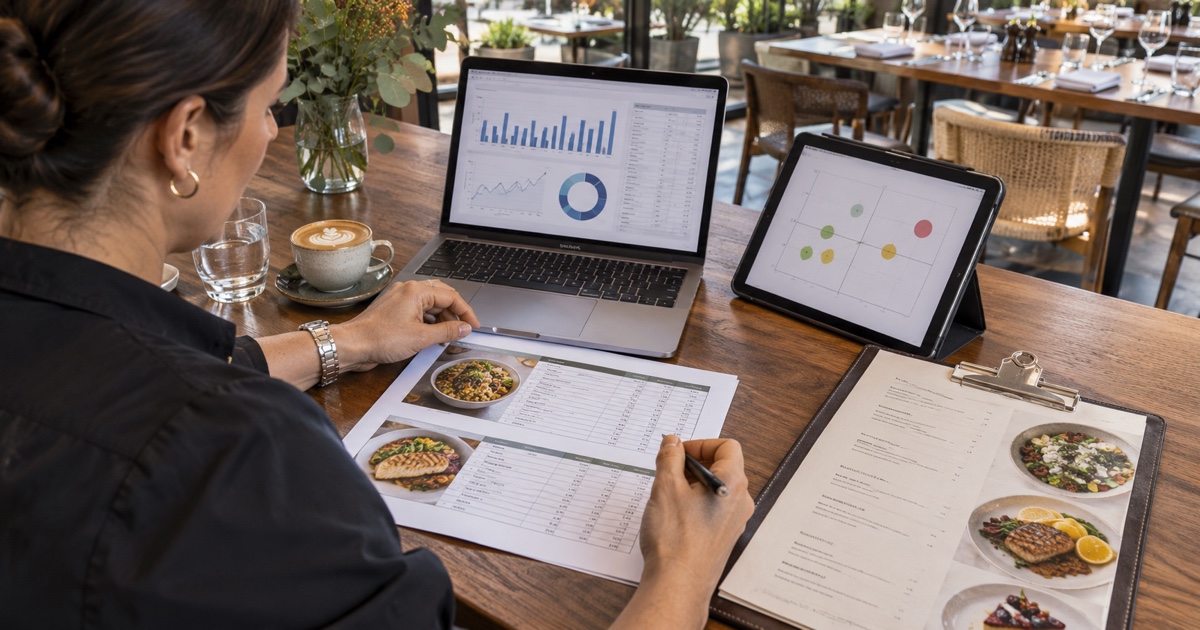
- Plot popularity and margin: Compare items within sensible categories so a side dish is not measured against a main course.
- Agree focused changes: Select a manageable group of pricing, recipe, placement or description tests with named owners.
- Review the result: Compare sales mix, contribution dollars, waste, ticket time and feedback after an agreed trading period.
Measures That Reveal Real Progress
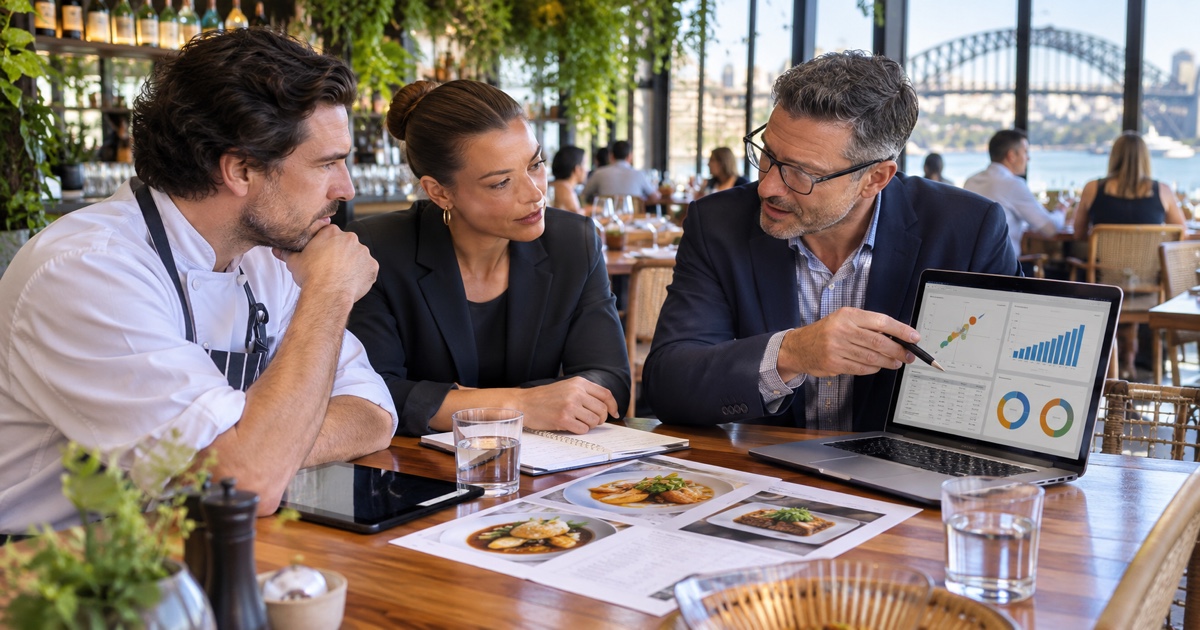
Track item contribution dollars, units and category mix alongside theoretical food cost, actual food cost, waste, average spend and ticket time. Compare the result by daypart where possible. A useful review should show whether the menu earns more from the demand already present without creating avoidable labour, quality or service problems.
Use the same definitions and review period each time so that the trend is meaningful. Combine financial and workforce measures with a service indicator; an apparent saving is not an improvement if it transfers work to managers, slows delivery or weakens the guest experience.
Mistakes That Distort the Result
- Increasing every price by the same percentage without considering category value and competitor context.
- Removing a lower-margin favourite before understanding its role in group ordering or brand identity.
- Using theoretical portions that are not reflected in actual preparation and plate checks.
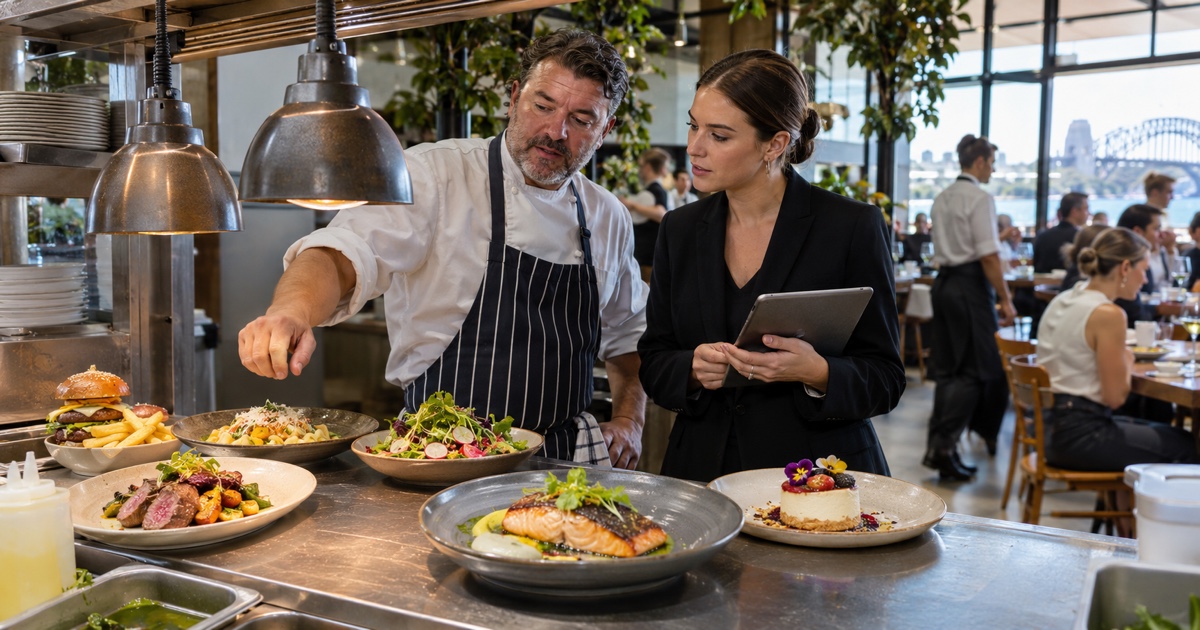
- Promoting a dish that the kitchen cannot produce reliably during the busiest service window.
- Judging success only by food-cost percentage instead of contribution dollars and guest behaviour.
Management Readiness Checklist
Before committing time or budget, check that the business can answer the following points clearly. A gap does not always stop the project, but it should become an explicit action rather than a hidden assumption.
- The POS item list and recipe names can be matched without extensive manual interpretation.
- Recipe costs use current invoices and standard portions that the kitchen is expected to follow.
- Managers understand whether the objective is margin, simplification, repositioning or a combination.
- Kitchen and front-of-house leaders have time to test and train the agreed changes.
- A review date and decision owner have been recorded before the revised menu is released.
Turning Evidence into Action
Menu engineering works best as a repeatable management discipline supported by accurate recipes and practical team routines. Aspire Hospitality Group can help Australian operators analyse menu performance, refine the product mix, strengthen costing controls and translate the decision into recipes, SOPs and service training that can be maintained after launch.
Explore Aspire Hospitality Group’s hospitality consulting services and training and digital SOP solutions for connected support. To discuss the priorities, operating context and next steps for your organisation, contact the Aspire Hospitality Group team.
Frequently Asked Questions
How much sales data is needed for menu engineering?
Use enough normal trading to reduce the effect of one unusual week. Four to twelve weeks is common, but seasonality, event trading and major promotions may justify a longer or segmented period.
Is contribution margin more important than food-cost percentage?
Both are useful. Contribution margin shows the dollars generated by each sale, while food-cost percentage helps monitor cost structure. Popularity, labour, waste and capacity are also needed for a sound decision.
Should unpopular items always be removed?
No. Some support dietary needs, signature positioning or group choice. First test whether visibility, description, price, seasonality or execution explains the low demand.
How often should Australian restaurants re-cost recipes?
Review high-volume and volatile ingredients regularly and complete a broader update when supplier prices, portions or menus change. The cost date should be visible in the recipe record.
Can menu engineering be used across several venues?
Yes, but compare local sales and costs before imposing one answer. A shared method and definitions can support the group while allowing product decisions to reflect each market.