
corporate catering Australia matters when Australian hospitality businesses need decisions that work commercially and operationally. A delivered morning tea, a staffed buffet and a formal plated dinner may all be described as corporate catering, yet they create very different demands on the venue, budget and event schedule. The strongest plan begins with the purpose of the occasion and the way guests need to move, meet and eat.
This guide takes a workforce roadmap approach and also considers workplace catering, business event catering, conference catering, corporate function menu and event catering service styles. The aim is to connect local conditions with practical action rather than offer a generic checklist detached from the venue.
For corporate catering Australia, a useful review makes the baseline, intended decision and accountable owner explicit. It also identifies what evidence will be checked after implementation and which guest, workforce or safety measures must not deteriorate in pursuit of a financial result. Managers should record assumptions about demand, labour, supply and timing so that the outcome can be interpreted fairly when conditions change. This discipline keeps the project connected to everyday operations and gives the team a clear reason for each action. It also makes corporate catering Australia easier to revisit: future leaders can see what was decided, why it was selected and when the standard should be reviewed rather than starting again from memory.
- Define the Workforce Outcome
- Five Workforce Decisions to Make
- Australian Labour-Market Considerations
- A Staged Workforce Roadmap
- Coverage and Capability Checklist
- Risks That Increase Vacancy and Turnover
- Measures for Availability, Cost and Quality
- Build Capability, Not Only Headcount
- Frequently Asked Questions
Define the Workforce Outcome
Corporate catering includes food, beverage, staffing, equipment and associated logistics for workplace meetings, conferences, launches, celebrations and client functions. Service can range from packaged delivery to self-serve stations, roaming canapés, buffets or seated courses. The chosen format should support the agenda rather than compete with it.
The organiser needs a food and service experience that is reliable, inclusive and appropriate to the host organisation. That means matching menu, quantities, staffing and equipment to the venue and guest profile, then making responsibilities and decision deadlines visible well before the event day.
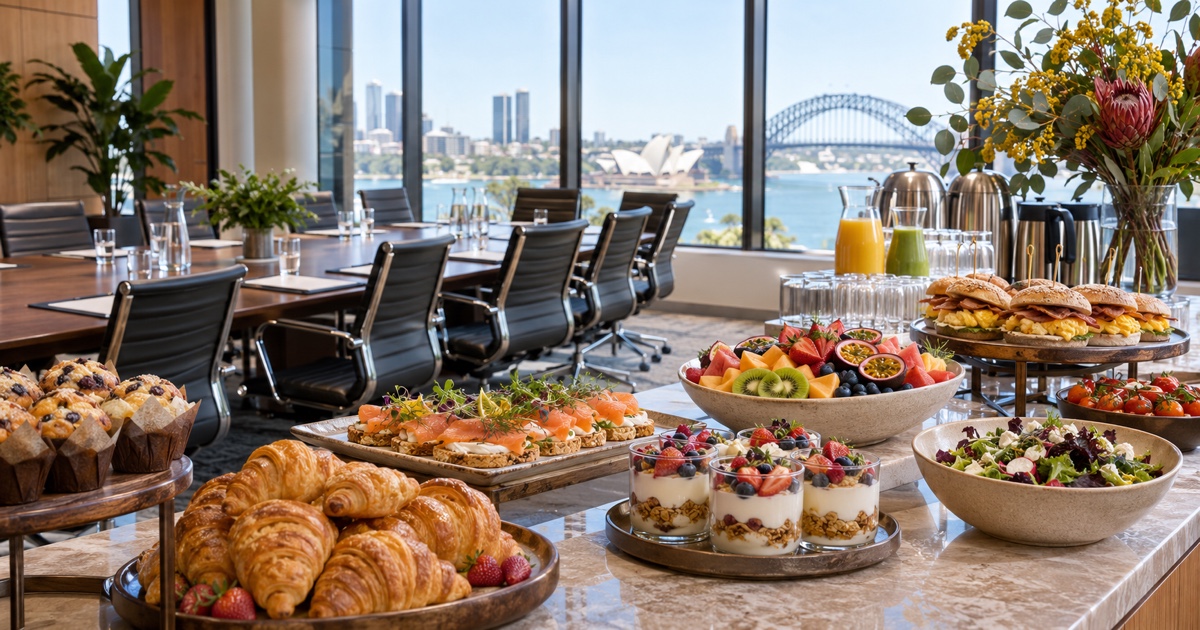
Five Workforce Decisions to Make
Event Purpose and Energy
A board meeting needs food that supports concentration and limited interruption. A launch may need visual impact and movement, while a staff celebration may place greater emphasis on generosity and social connection. Define the desired pace and tone before selecting dishes or a service style.
Agenda and Eating Window
Map arrival, presentations, breaks and departure. Guests need enough time to collect and consume food without queues or unfinished plates. If the schedule is tight, individual portions or efficient stations may be more effective than a format that requires lengthy ordering or table service.
Guest Profile and Inclusion
Consider age range, cultural expectations, accessibility and the balance of employees, clients and VIPs. Collect allergies and other dietary requirements with a deadline, then confirm production separation, labelling and the person who can answer questions during service.
Venue and Equipment
Check refrigeration, heating, water, power, loading, lifts, parking, waste, furniture and cleaning rules. Confirm what the caterer supplies and what the venue expects. Small omissions such as limited power outlets or no washing area can materially change the service plan.
Staffing and Coordination
Clarify the event lead, chef coverage, service ratios, beverage responsibilities and the hours included. The organiser, venue and caterer should know who can approve a change. One current function sheet is more reliable than instructions distributed across several email threads.
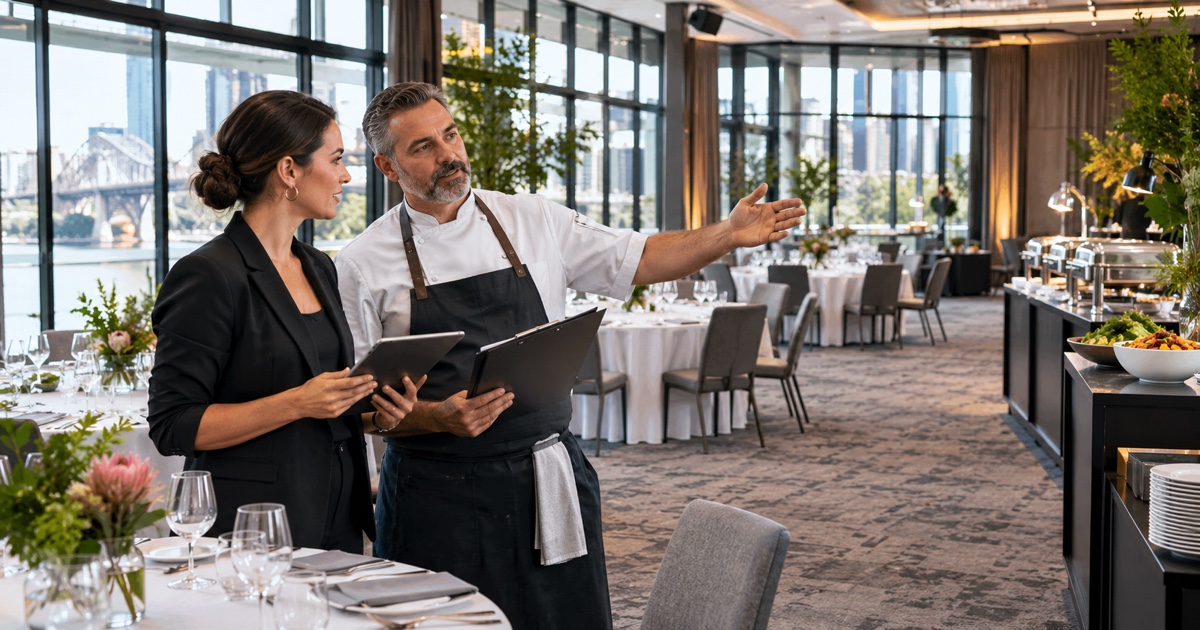
Australian Labour-Market Considerations
Australian events may involve CBD loading restrictions, regional travel, hot weather, outdoor conditions, venue licensing, responsible service of alcohol and limited back-of-house facilities. Ingredient seasonality and long delivery distances can affect menu choice. Dietary needs must be collected and managed through a credible process rather than treated as informal last-minute requests.
Share the full run sheet and arrange a site inspection when access, equipment or service is complex. Ask the caterer to explain how the proposed format will operate minute by minute, including arrival, setup, replenishment, clearing and pack-down. A menu is only suitable when it can travel, hold and be served safely within the available window.
A Staged Workforce Roadmap
- Write the operating brief: Include purpose, venue, guest estimate, budget, agenda, service preference and decision dates.
- Choose the format: Assess delivery, buffet, stations, canapés or plated service against timing, interaction and facilities.
- Confirm the menu: Balance seasonality, travel, dietary inclusion, portion, presentation and the time available to eat.
- Resolve the logistics: Allocate access, equipment, staffing, beverage, waste, cleaning and pack-down responsibilities.
- Run a final briefing: Circulate the approved run sheet, numbers, dietary list, contacts and contingency arrangements.
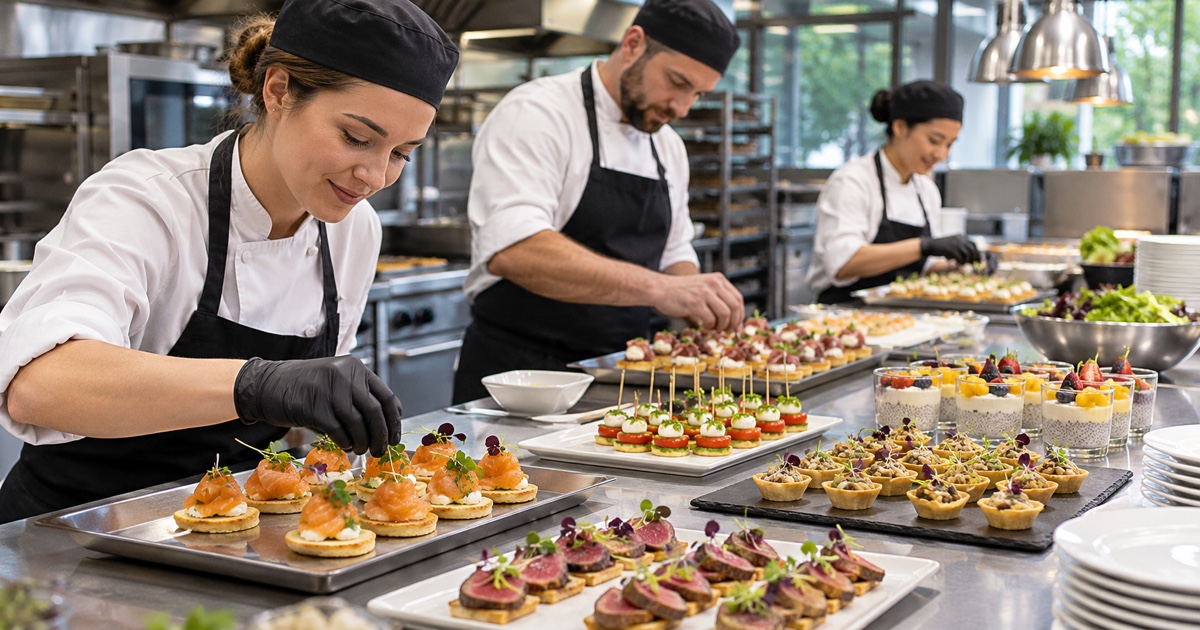
Coverage and Capability Checklist
Before committing time or budget, check that the business can answer the following points clearly. A gap does not always stop the project, but it should become an explicit action rather than a hidden assumption.
- The venue has confirmed access times, loading arrangements and available facilities.
- The agenda contains realistic setup, service and clearing windows.
- Guest numbers and dietary requirements have clear confirmation deadlines.
- Quotes separate food, labour, equipment, delivery, beverages and optional charges.
- The organiser, venue and catering lead have one current contact and escalation plan.
Risks That Increase Vacancy and Turnover
- Selecting food before the service window and venue constraints are understood.
- Comparing quotations that assume different staffing, equipment and pack-down duties.
- Relying on a menu label without confirming the caterer’s allergy-control process.
- Ordering exactly to an early RSVP count without an agreed contingency or final deadline.
- Leaving event-day authority unclear when organisers, venue staff and caterers are all present.
Measures for Availability, Cost and Quality
Review on-time setup, service timing, dietary accuracy, queue length, guest feedback, food waste, beverage use and final cost against the approved budget. For recurring events, also measure how much organiser intervention was needed. A dependable catering model should reduce planning effort and uncertainty over time.
Use the same definitions and review period each time so that the trend is meaningful. Combine financial and workforce measures with a service indicator; an apparent saving is not an improvement if it transfers work to managers, slows delivery or weakens the guest experience.

Build Capability, Not Only Headcount
Corporate catering should help the host focus on the purpose of the event rather than manage avoidable service problems. Aspire Hospitality Group can support Australian workplaces and functions with menu planning, staffing, equipment and logistics shaped around the venue, guests and schedule.
Explore Aspire Hospitality Group’s corporate and event catering services and hospitality and event consulting for connected support. To discuss the priorities, operating context and next steps for your organisation, contact the Aspire Hospitality Group team.
Frequently Asked Questions
Which catering format works best for a corporate meeting?
The answer depends on duration, room layout and how much interruption is acceptable. Delivered individual meals suit short meetings, while buffets or stations can work when guests have a defined break.
How early should corporate catering be booked?
Simple delivery may need limited lead time, but staffed events, popular dates and complex venues should be booked earlier. Ask when menu, numbers and dietaries become final.
How much food should be allowed per guest?
Quantity depends on time of day, event duration, whether food replaces a meal and the service format. Ask the caterer to explain the portion basis and contingency.
What should a corporate catering quote show?
It should separate food, labour, delivery, equipment, beverages, setup, cleaning and optional charges, with assumptions about guest count, timing and access stated clearly.
How should dietary requirements be managed?
Collect them through one process, distinguish allergies from preferences and confirm preparation, separation, labelling and service identification with the caterer before the event.