
SOP management matters when Australian hospitality businesses need decisions that work commercially and operationally. Procedures are useful only when they reflect current work, are easy to find and influence behaviour. A folder of documents can create false confidence if staff rely on memory, managers issue conflicting versions or changes never reach training and supervision.
This guide takes a guest journey approach and also considers hospitality SOPs, restaurant procedures, venue compliance procedures, digital SOP management and hospitality staff training. The aim is to connect local conditions with practical action rather than offer a generic checklist detached from the venue.
For SOP management, a useful review makes the baseline, intended decision and accountable owner explicit. It also identifies what evidence will be checked after implementation and which guest, workforce or safety measures must not deteriorate in pursuit of a financial result. Managers should record assumptions about demand, labour, supply and timing so that the outcome can be interpreted fairly when conditions change. This discipline keeps the project connected to everyday operations and gives the team a clear reason for each action. It also makes SOP management easier to revisit: future leaders can see what was decided, why it was selected and when the standard should be reviewed rather than starting again from memory.
- Begin with the Guest Promise
- How Australian Expectations Vary
- Five Moments That Shape the Experience
- Guest-Journey Checklist
- Turn Standards into Daily Behaviour
- Service Gaps That Guests Notice
- Measure Experience and Operating Impact
- Create Consistency Without Losing Warmth
- Frequently Asked Questions
Begin with the Guest Promise
SOP management is the lifecycle used to identify, write, approve, publish, train, review and retire standard operating procedures. In hospitality, it covers kitchen, service, safety, administration and management routines. The objective is consistent work with appropriate judgement, not documentation for its own sake.
Australian venues need procedures that support lawful, safe and commercially practical operations while remaining usable during real service. The system should show which version is current, who owns it, how competence is checked and how incidents or frontline feedback lead to improvement.
How Australian Expectations Vary
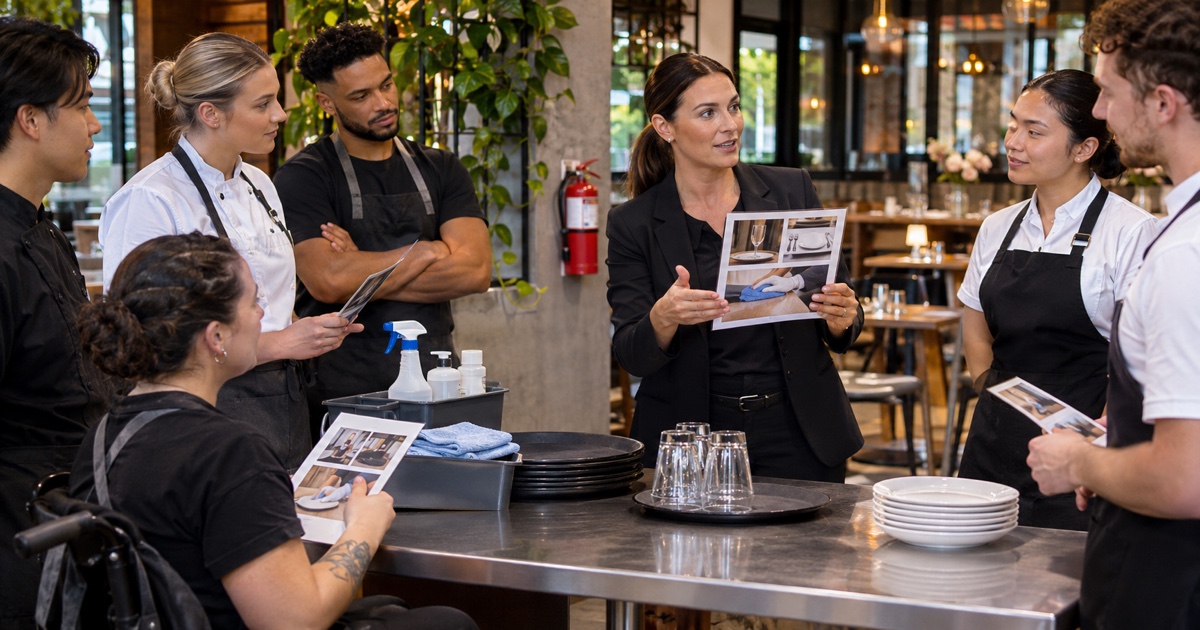
Requirements differ by state, workplace, food operation, licence and service model. Procedures may need to reflect food safety, work health and safety, responsible service, employment practices, emergency arrangements and site rules. SOPs do not replace professional advice or current regulation; they translate verified requirements into venue-specific action.
Create a register and prioritise procedures by risk, frequency and inconsistency. Observe the work before writing, involve the employees who perform it and have accountable specialists or managers verify technical content. Publish concise task instructions near the point of use and keep supporting policy or reference material separate.
Five Moments That Shape the Experience
Governance and Ownership
Assign an owner, approver, effective date and review trigger to each procedure. Define which changes require specialist review and how emergency updates are communicated. Without ownership, documents remain current only by accident and different departments may solve the same issue differently.
Usable Procedure Design
Write for the person and situation in which the task occurs. Use clear steps, decision points, images or short demonstrations where helpful. Separate essential controls from background explanation. A procedure that cannot be used during work will become a training handout rather than an operating tool.
Version and Access Control
Maintain one approved source, archive replaced versions and make the current procedure easy to search on appropriate devices. Avoid attachments copied across email or chat. Record acknowledgements where necessary, but do not confuse opening a document with understanding the task.
Training and Competence
Introduce the reason for the standard, demonstrate it, allow supervised practice and verify performance. Use role-based learning so employees receive the procedures relevant to them. Managers need coaching on how to reinforce standards and handle justified exceptions.
Review and Improvement
Trigger review after incidents, equipment changes, menu changes, legal updates or repeated exceptions. Collect frontline feedback and analyse whether the issue came from the document, training, resources or supervision. Update connected checklists and learning at the same time.
Guest-Journey Checklist
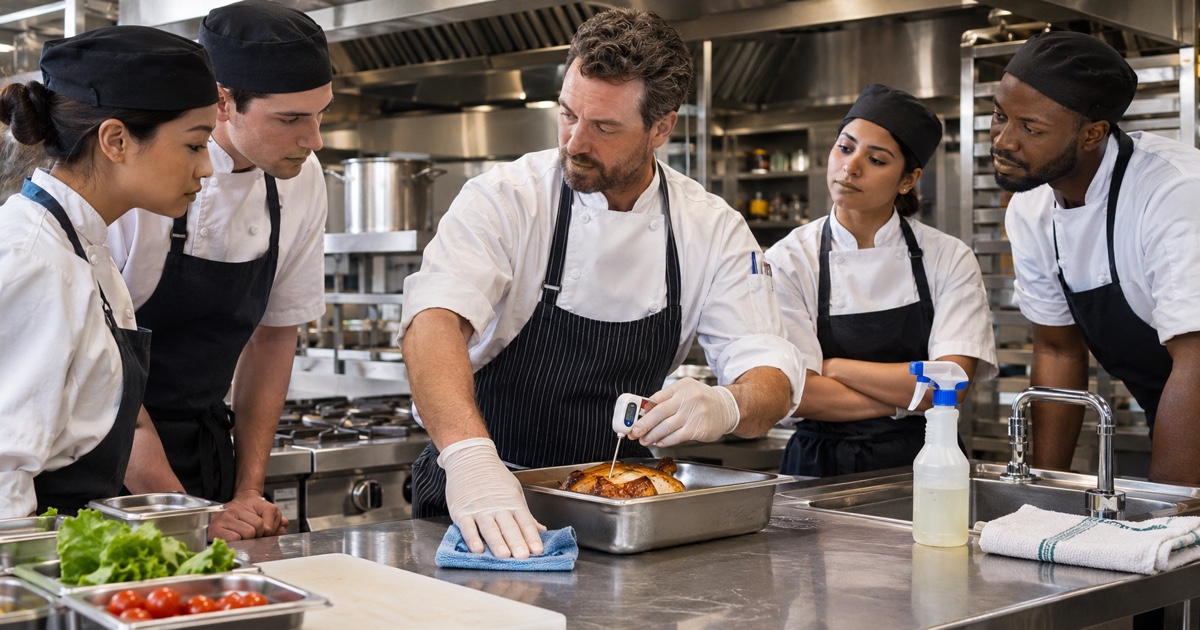
Before committing time or budget, check that the business can answer the following points clearly. A gap does not always stop the project, but it should become an explicit action rather than a hidden assumption.
- Each critical procedure has an accountable operational owner and appropriate approver.
- Technical requirements have been verified against current professional or regulatory advice.
- Employees can access the current version during the task without searching through old files.
- Training includes demonstration and competence checks, not only acknowledgement.
- Review triggers and links to connected forms, checklists and learning are documented.
Turn Standards into Daily Behaviour
- Build the register: List current procedures, owners, versions, risk, users and known gaps.
- Prioritise critical work: Start with safety, legal, high-frequency and high-variation tasks rather than rewriting everything.
- Observe and draft: Map actual work with frontline employees, then verify requirements and write clear steps.
- Publish and train: Place one current version at the point of use and assess role-specific competence.
- Review on evidence: Use incidents, audits, feedback and operational change to update the procedure and training.
Service Gaps That Guests Notice
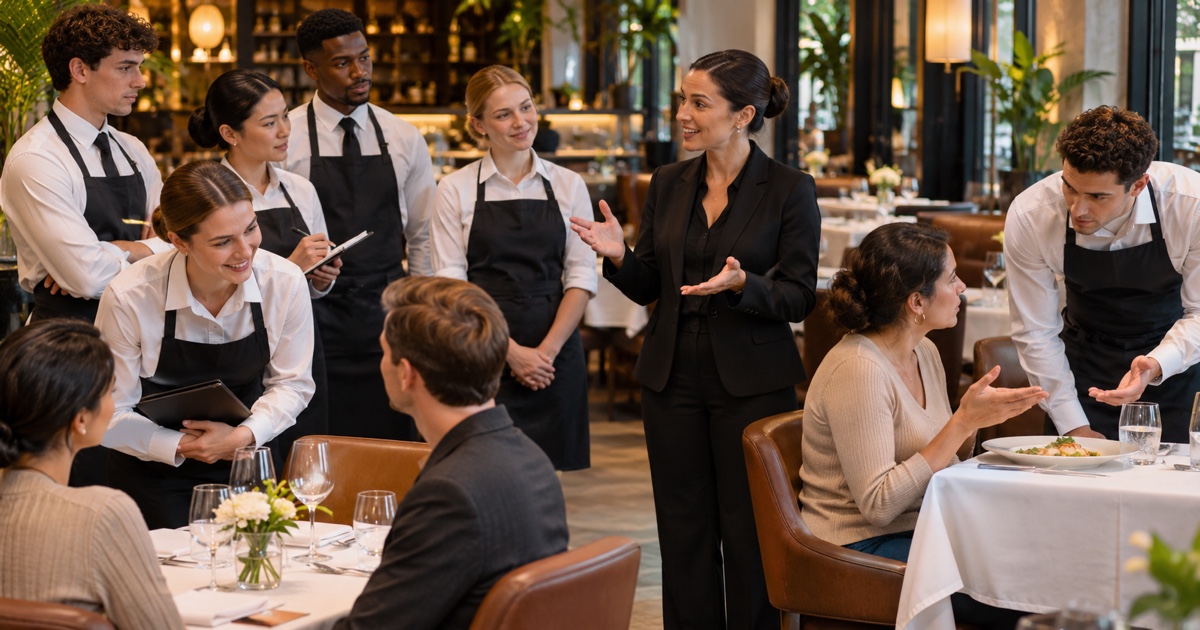
- Copying generic procedures that do not match the venue, equipment or service model.
- Publishing long documents without designing quick instructions for the point of use.
- Allowing several uncontrolled versions to remain available to staff.
- Recording completion of online reading without checking practical competence.
- Updating a procedure after an incident but leaving forms, training and supervision unchanged.
Measure Experience and Operating Impact
Monitor critical procedure coverage, overdue reviews, training and competence completion, audit findings, repeat incidents, exception frequency and time to update after a change. Add operational measures relevant to the procedure, such as temperature compliance, service recovery time or cash variance, to test whether behaviour actually improved.
Use the same definitions and review period each time so that the trend is meaningful. Combine financial and workforce measures with a service indicator; an apparent saving is not an improvement if it transfers work to managers, slows delivery or weakens the guest experience.

Create Consistency Without Losing Warmth
Effective SOP management turns verified requirements and operational knowledge into consistent daily practice. Aspire Hospitality Group can help Australian venues map processes, create accessible digital SOPs and connect procedures with training, assessment and management review.
Explore Aspire Hospitality Group’s digital SOP and hospitality training solutions and hospitality operations consulting for connected support. To discuss the priorities, operating context and next steps for your organisation, contact the Aspire Hospitality Group team.
Frequently Asked Questions
Which hospitality SOPs should be written first?
Prioritise tasks with safety, legal, food, cash or guest risk, followed by frequent work with inconsistent results. Use a register rather than rewriting documents randomly.
How often should SOPs be reviewed?
Set risk-based dates and also review after incidents, equipment, menu, system or legal changes. High-risk procedures may need more frequent verification.
Are digital SOPs better than paper?
Digital systems improve access, search and version control, but only if devices are practical at the point of work. Some task areas still benefit from controlled printed aids.
Does staff acknowledgement prove competence?
No. It shows access or reading. Competence may require explanation, demonstration, supervised practice and observation against a clear standard.
Who should approve a hospitality procedure?
The operational owner should work with people qualified to verify any legal, safety, food or technical requirements. Approval authority should be recorded in the SOP system.